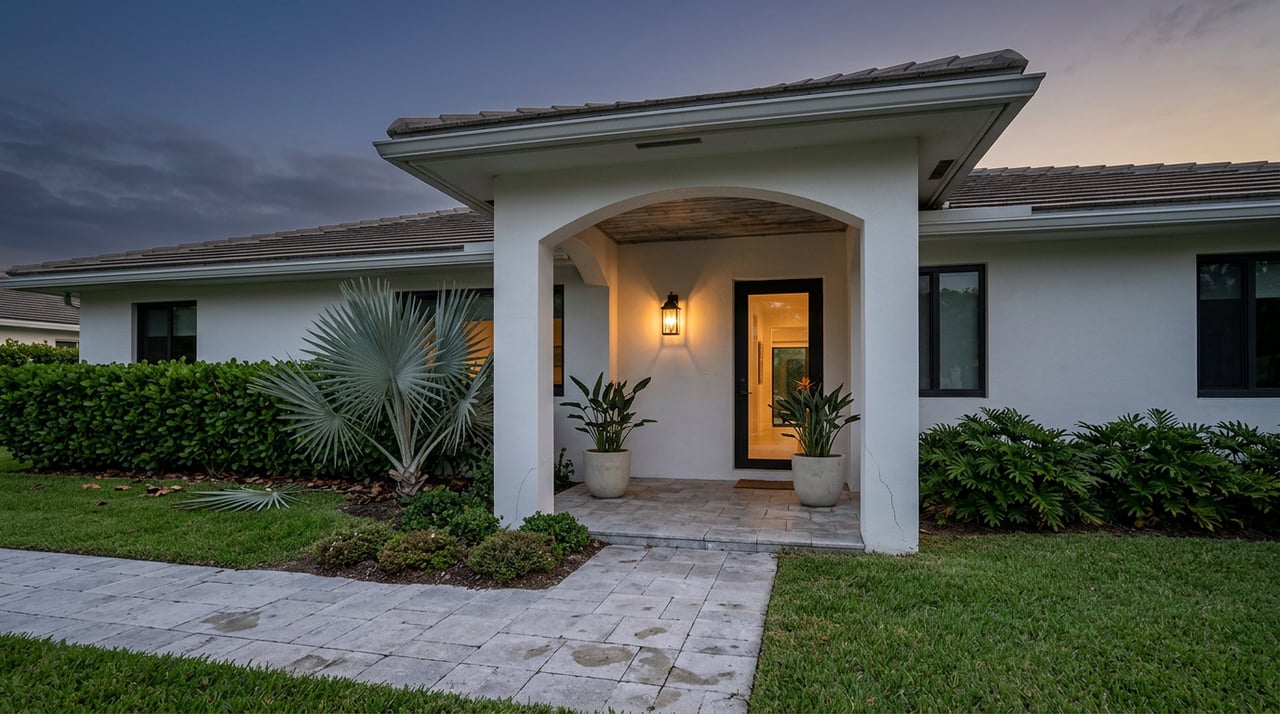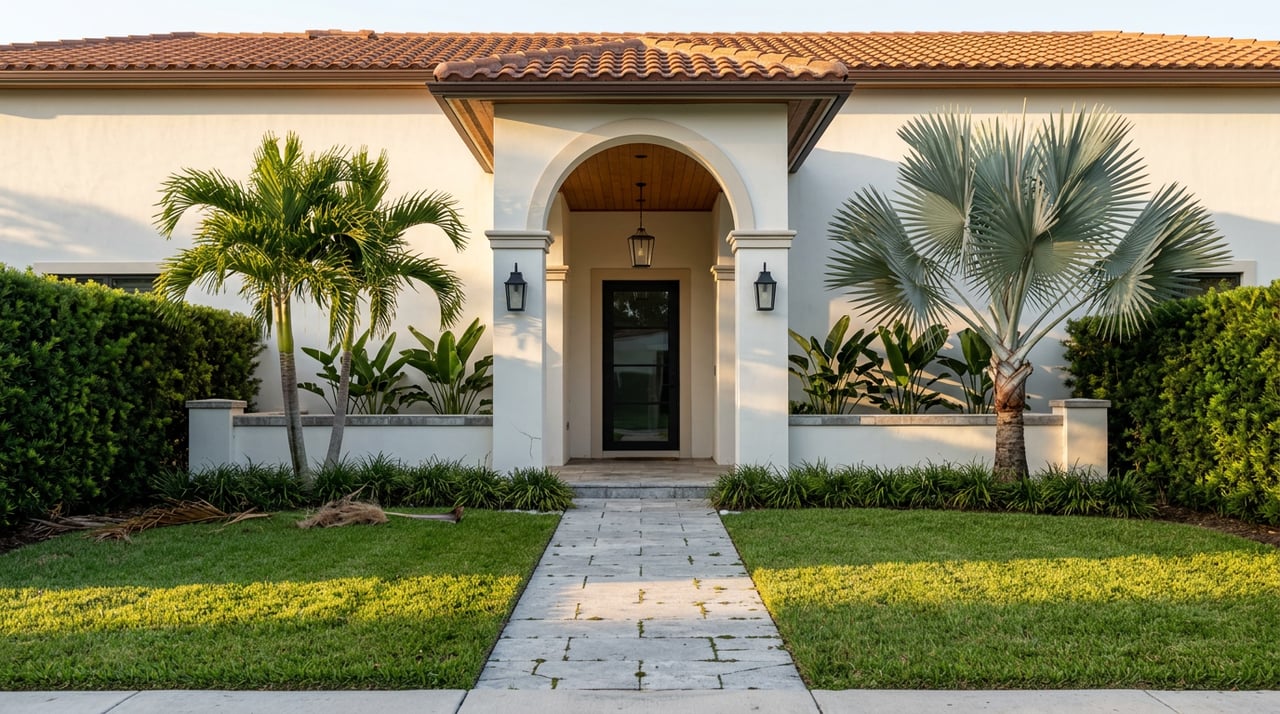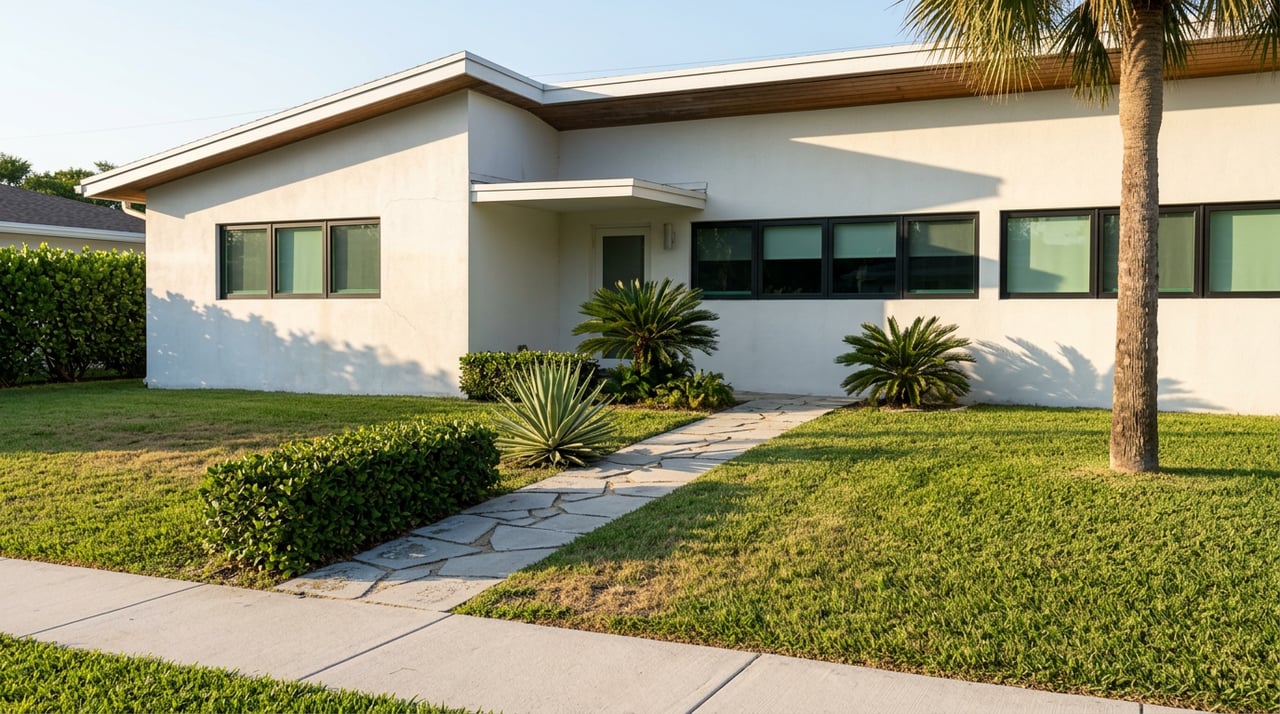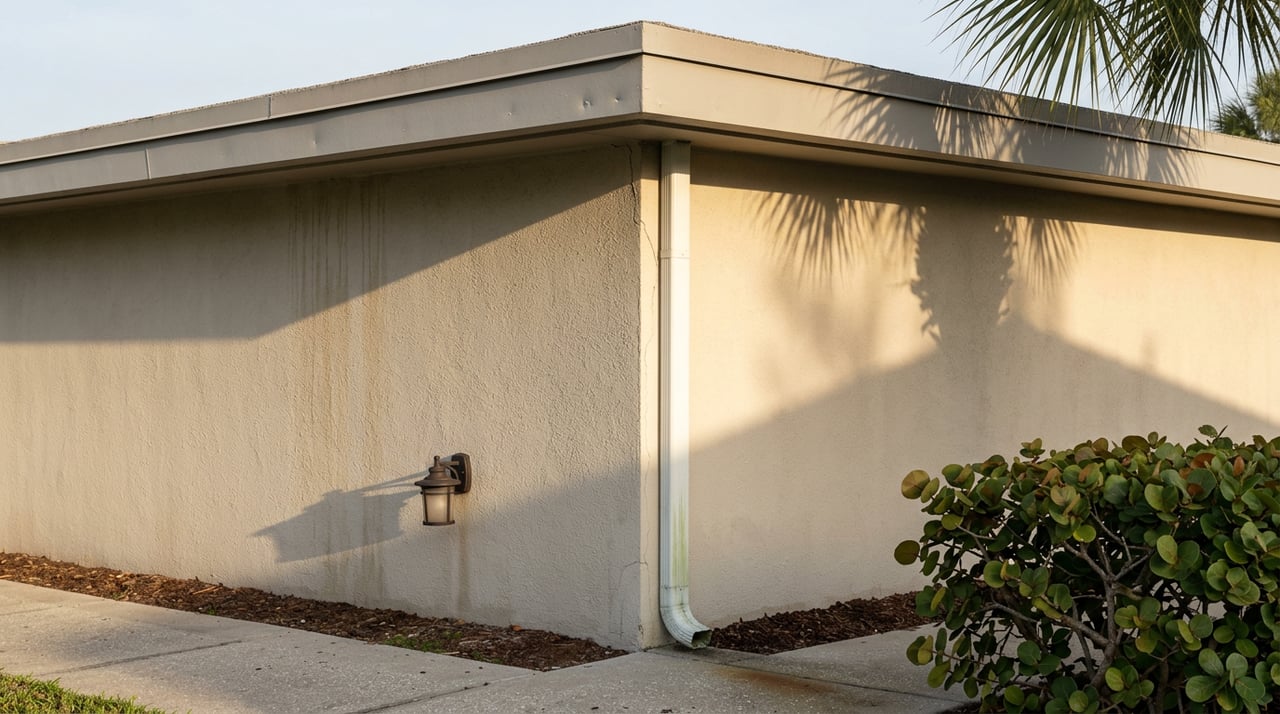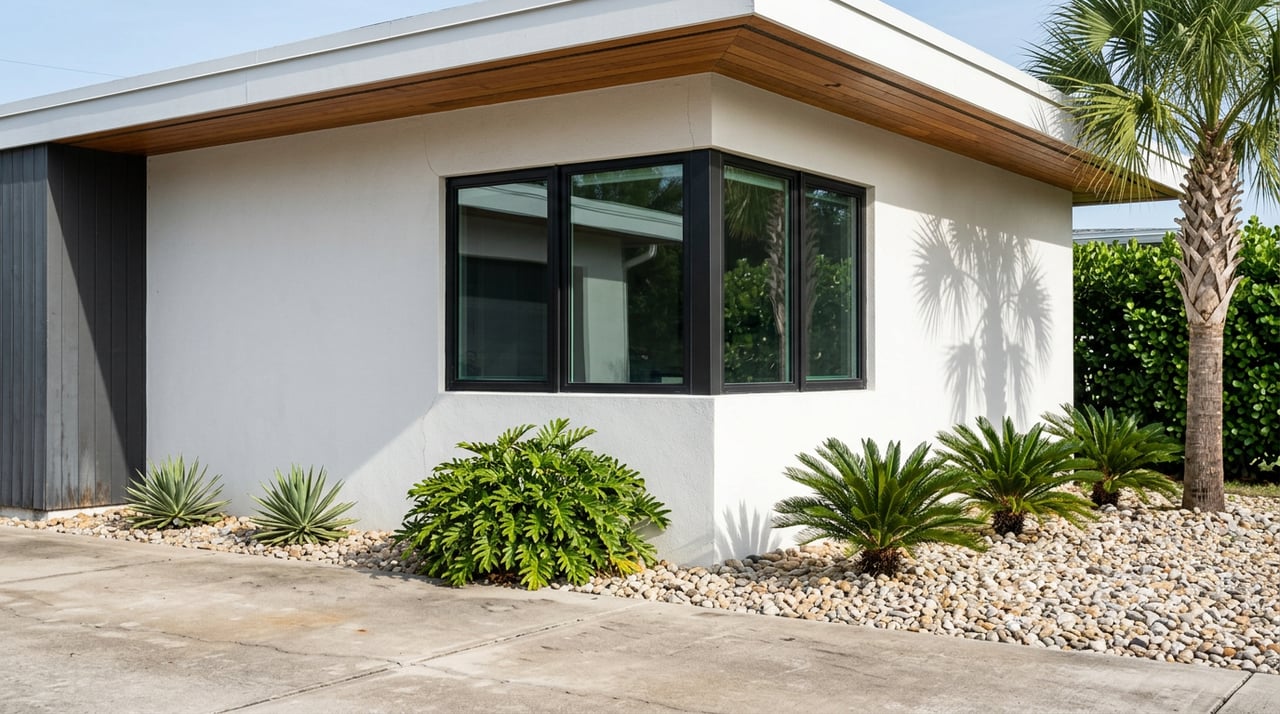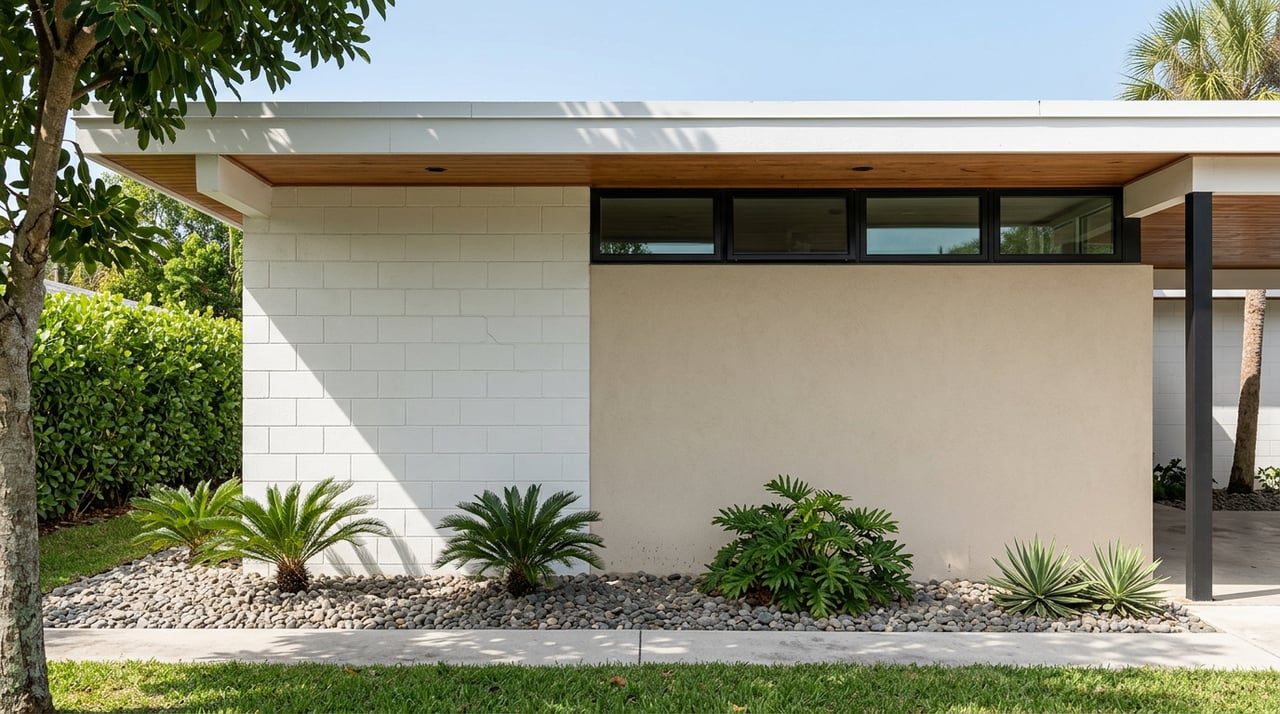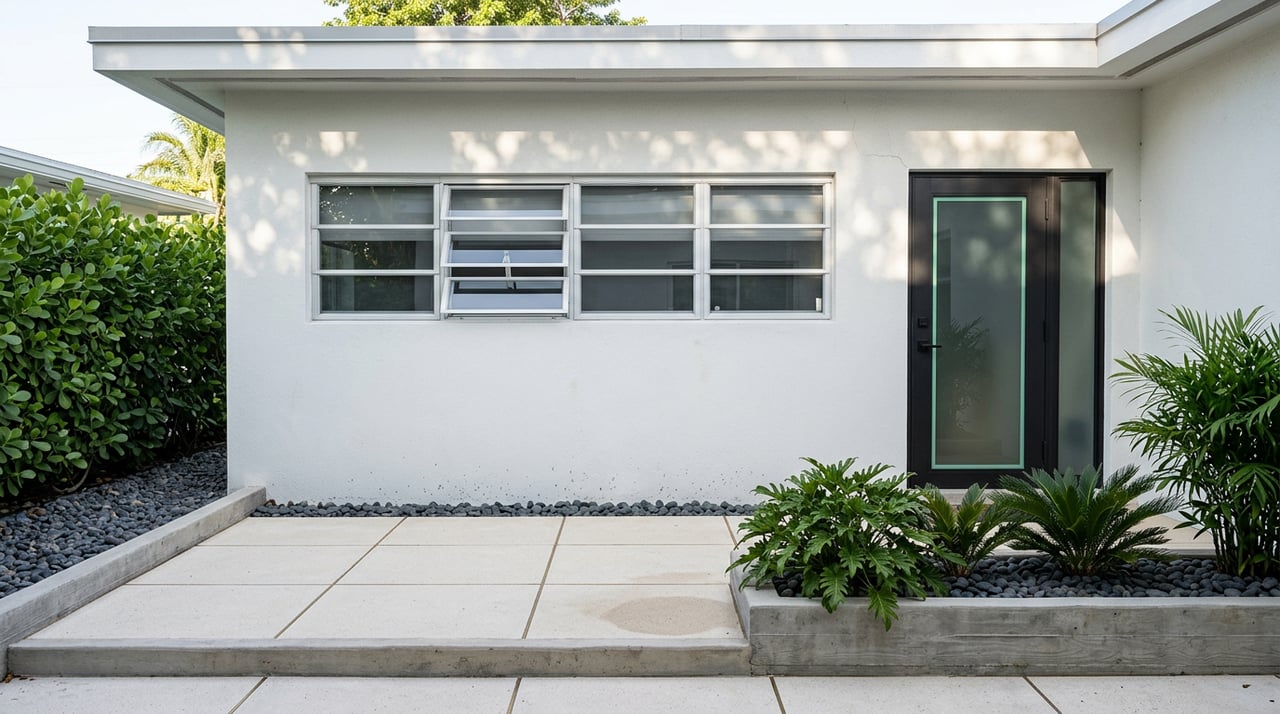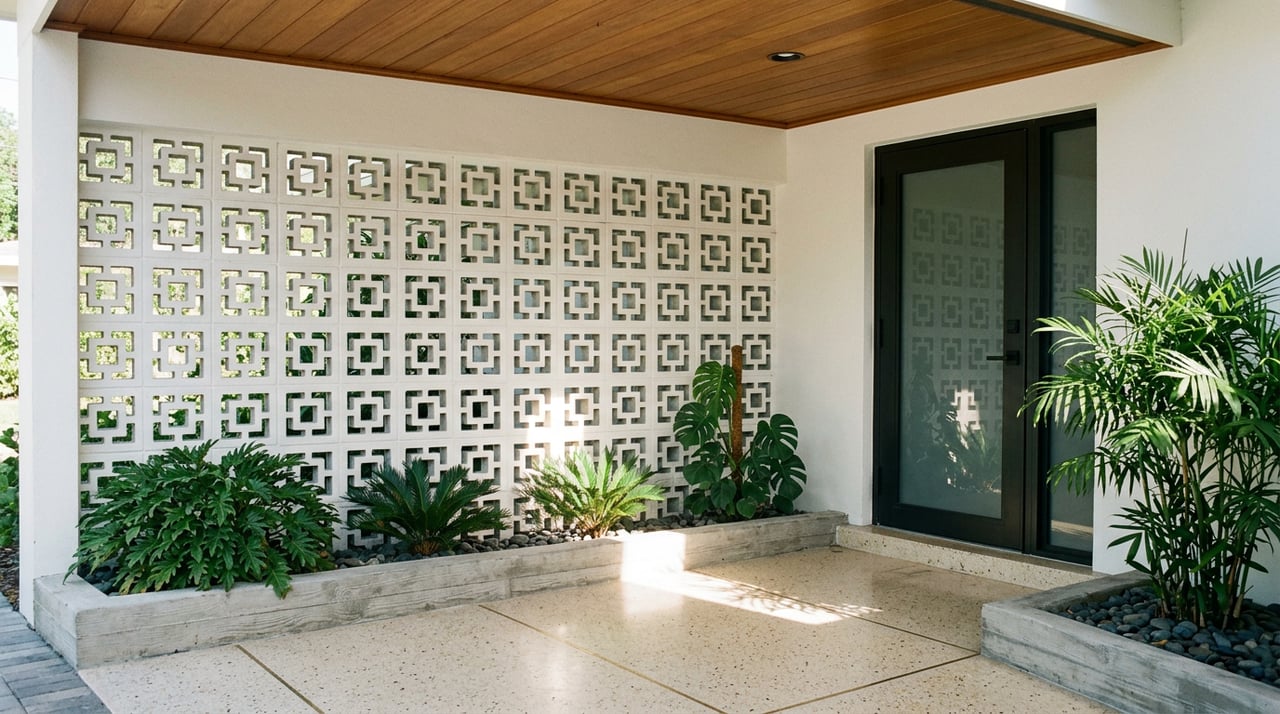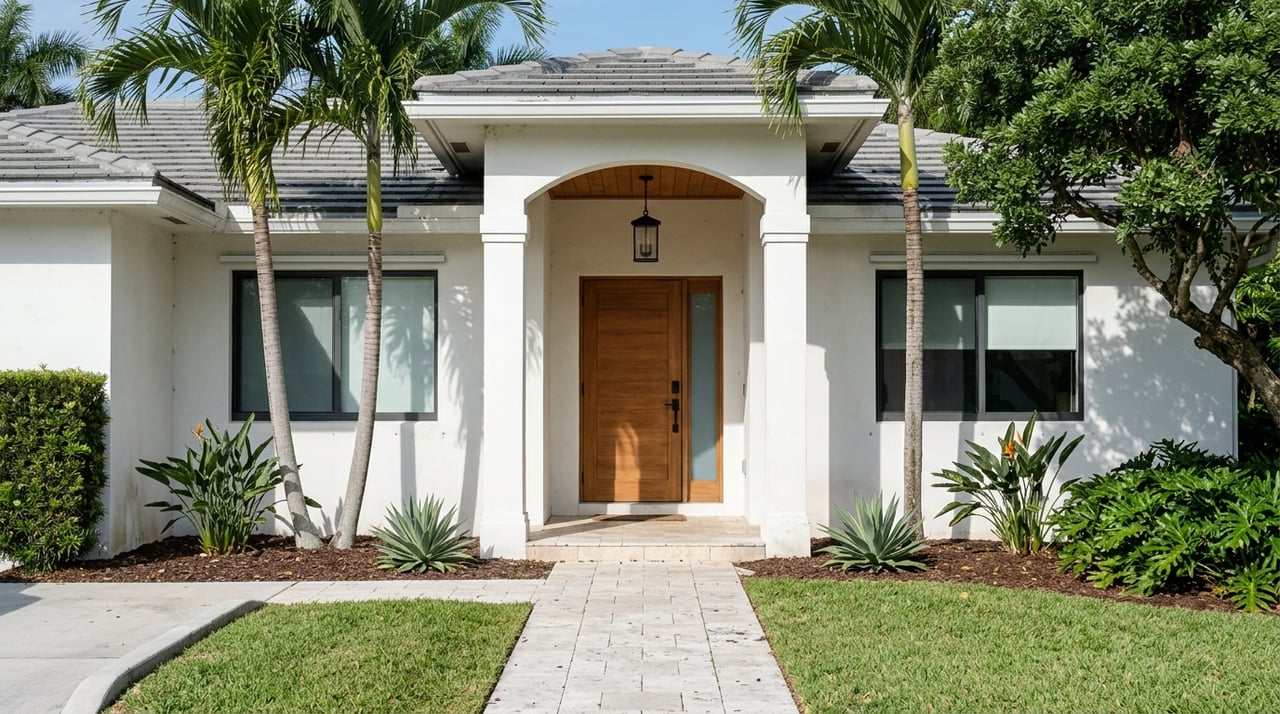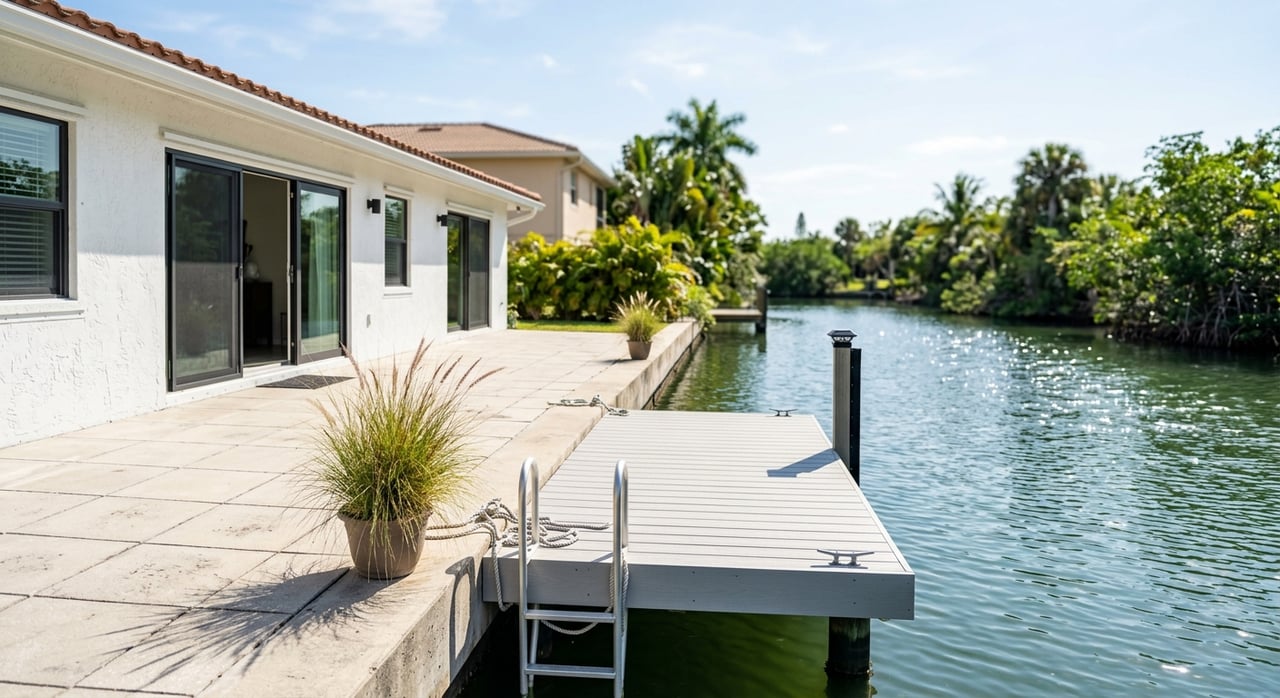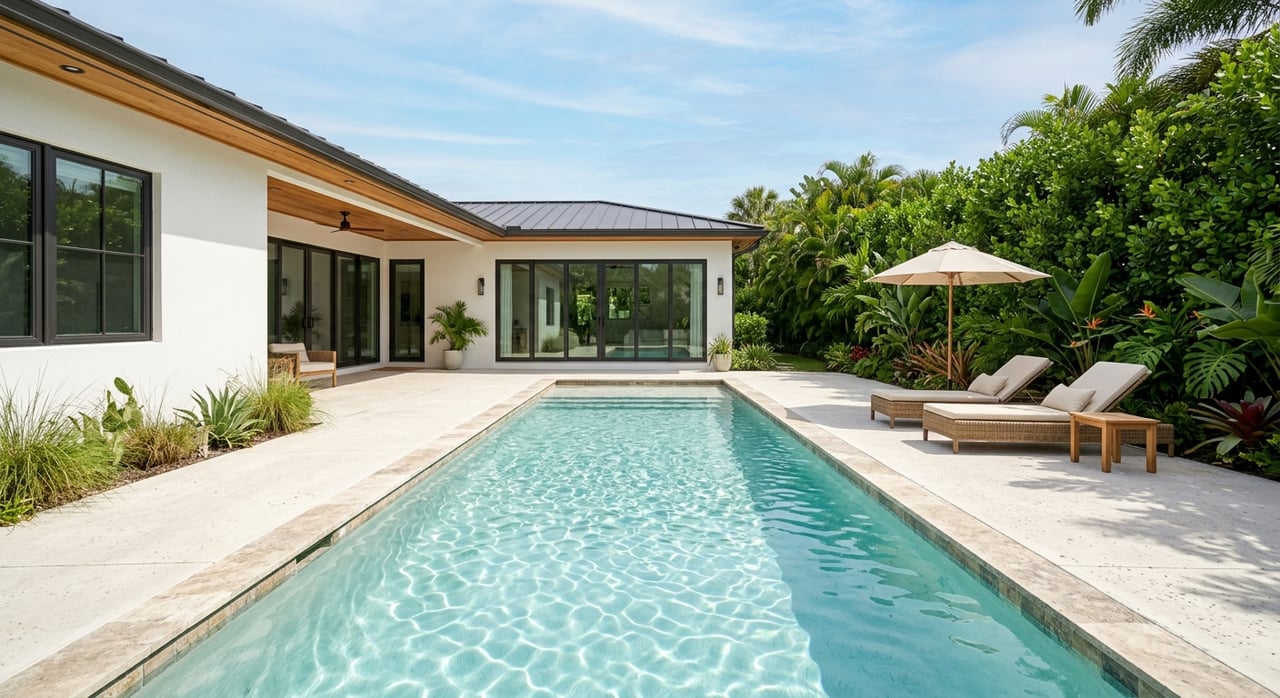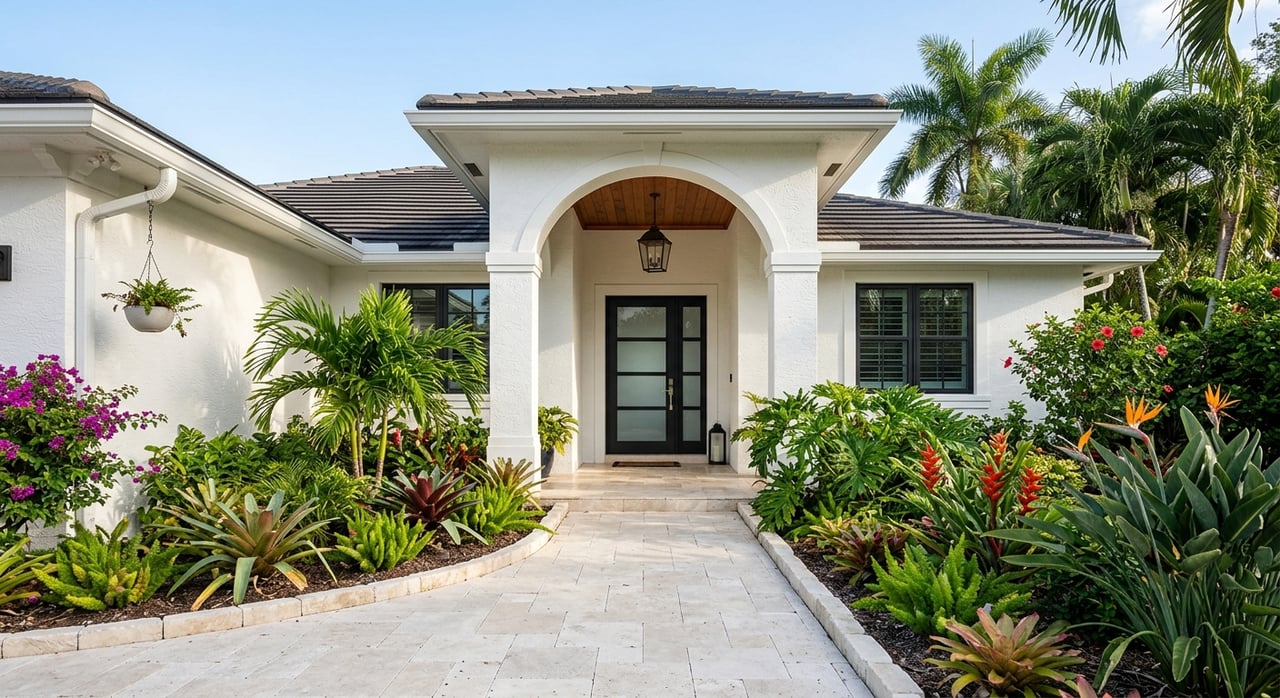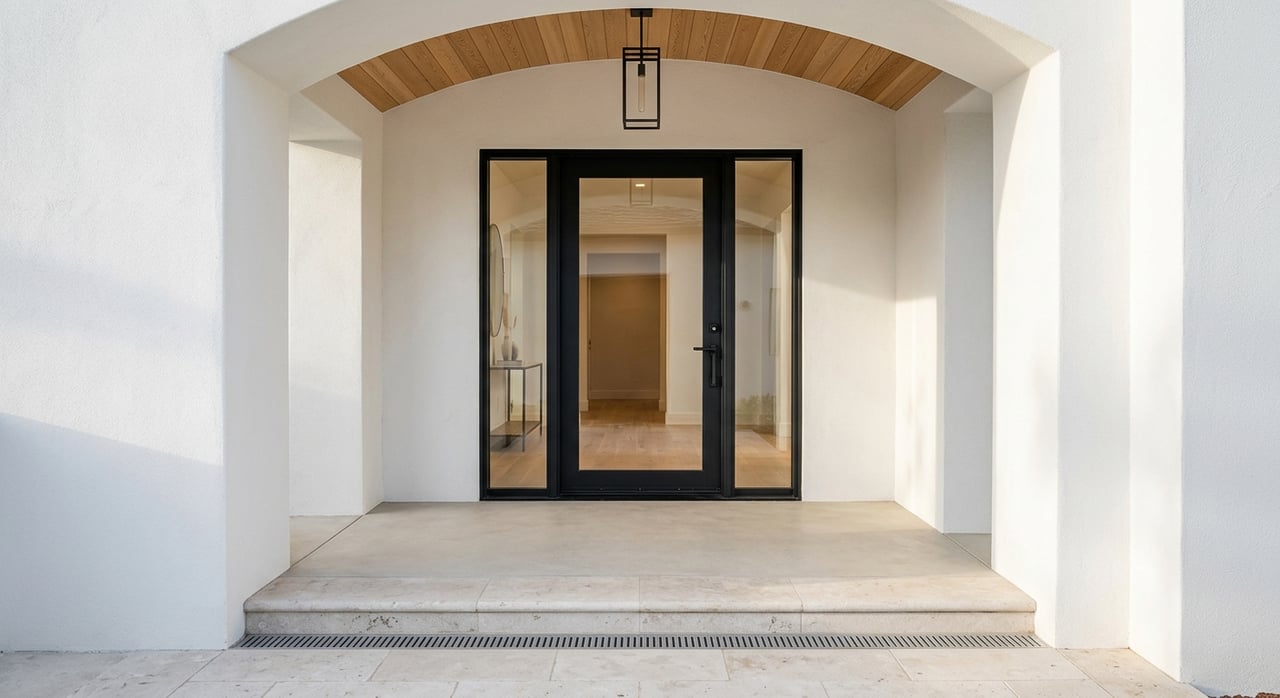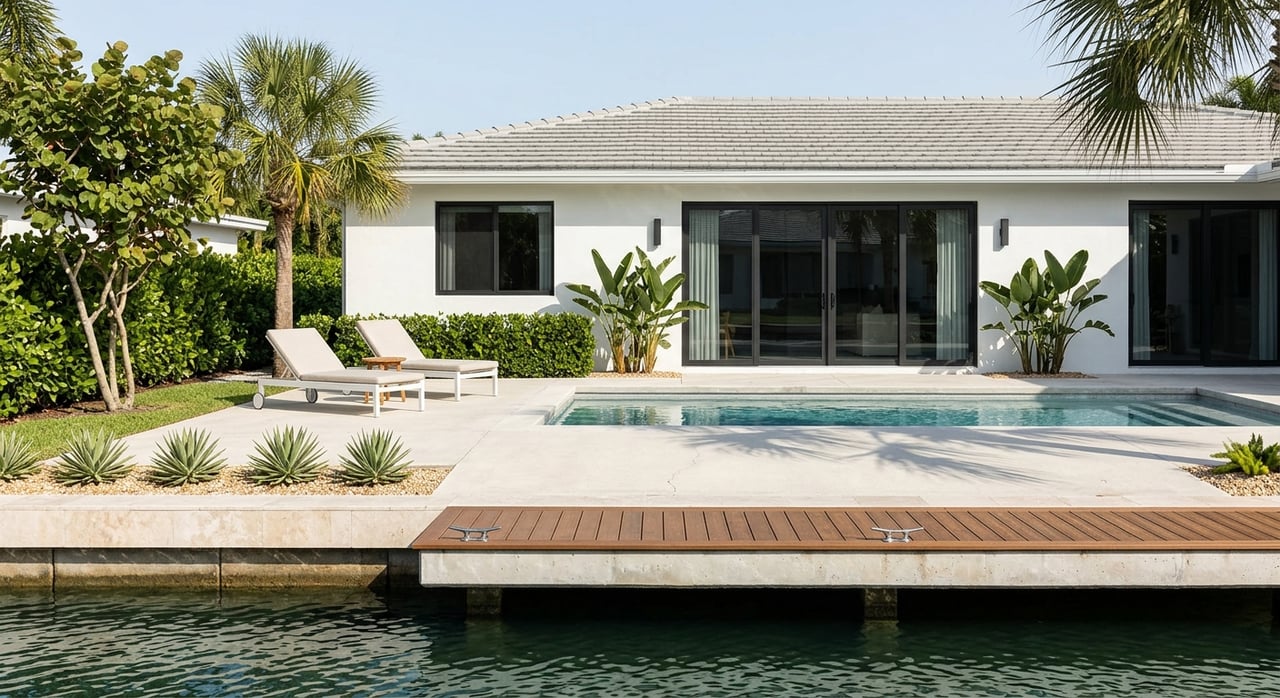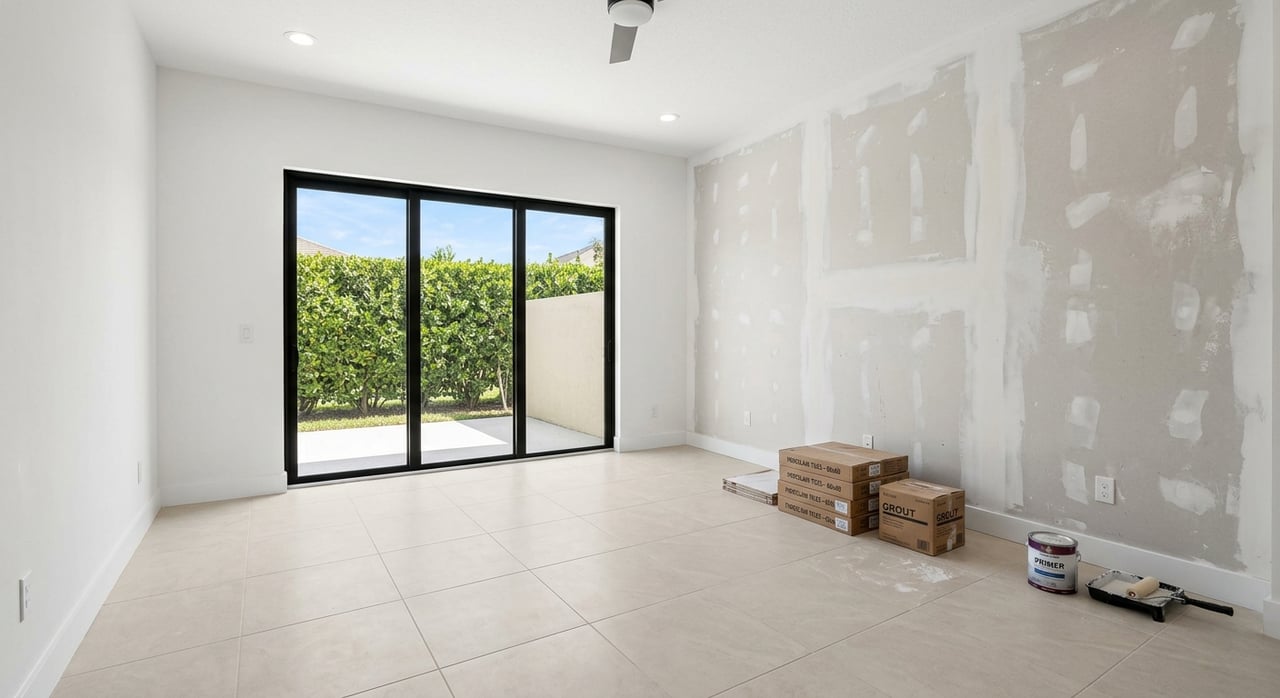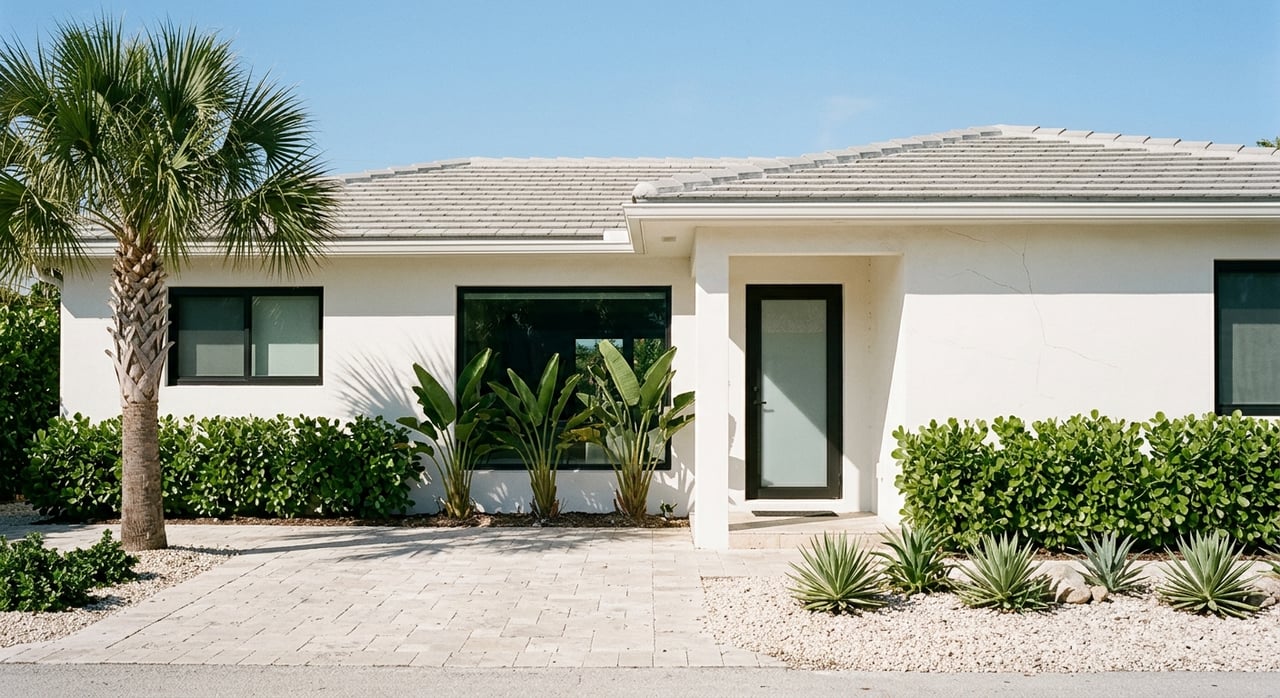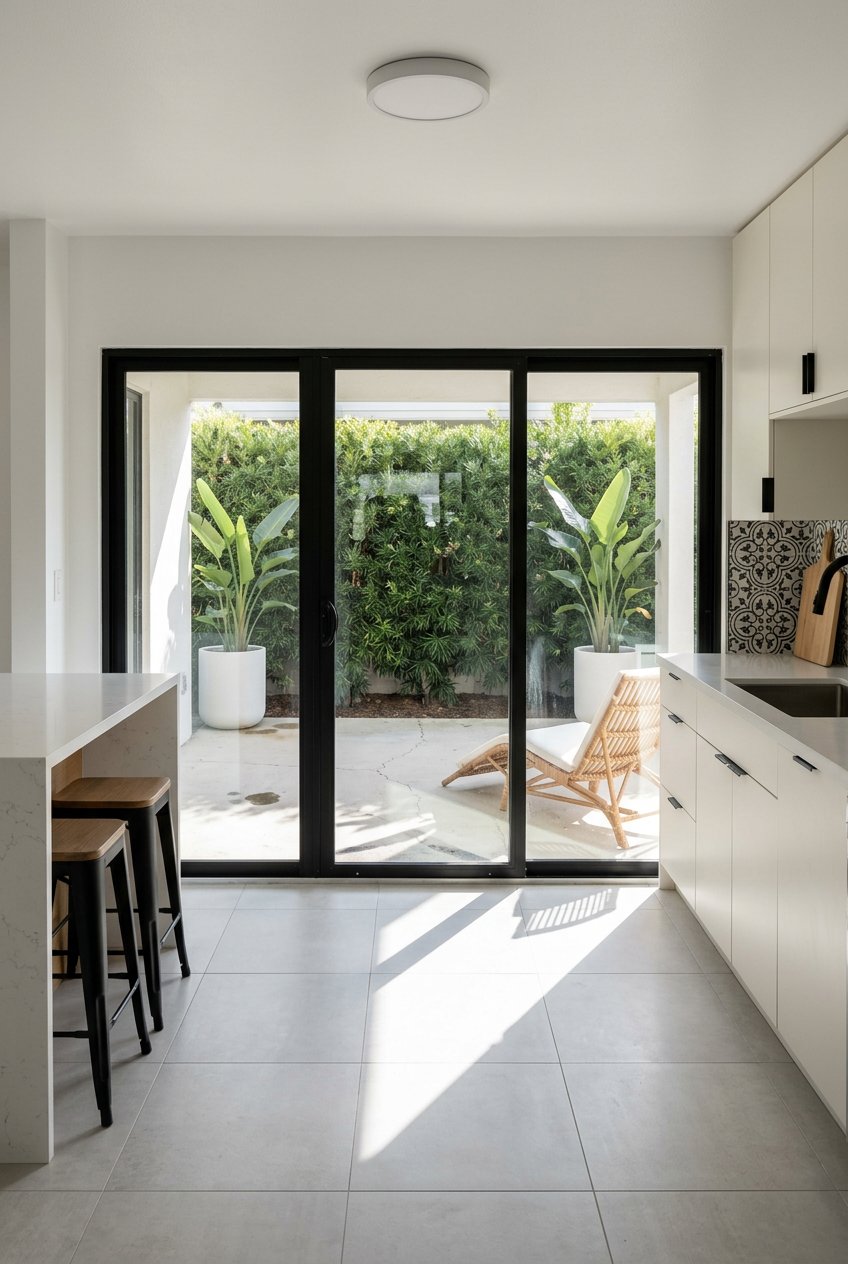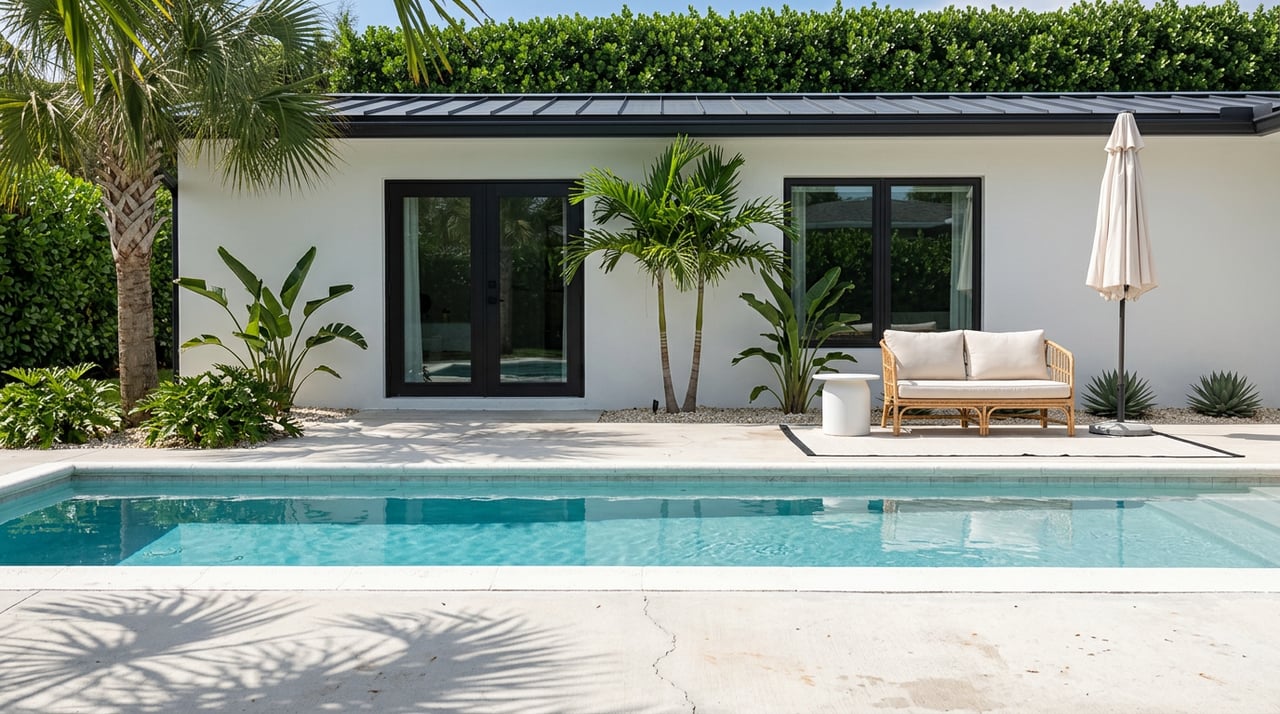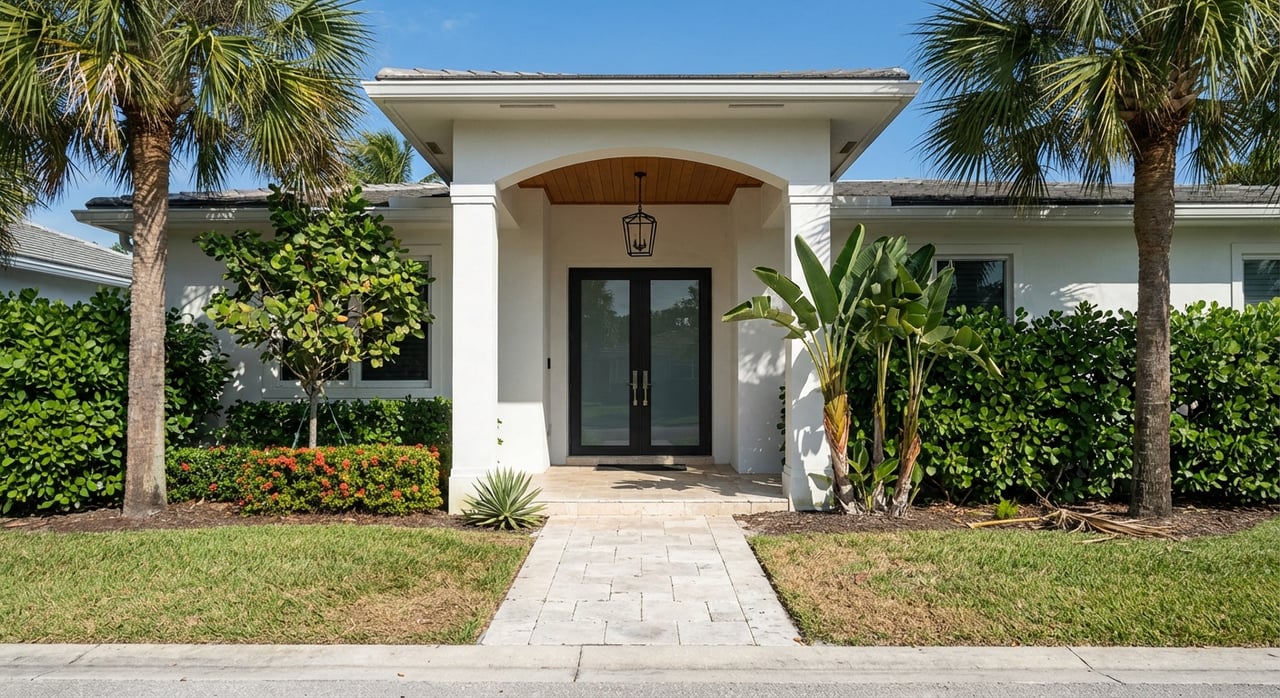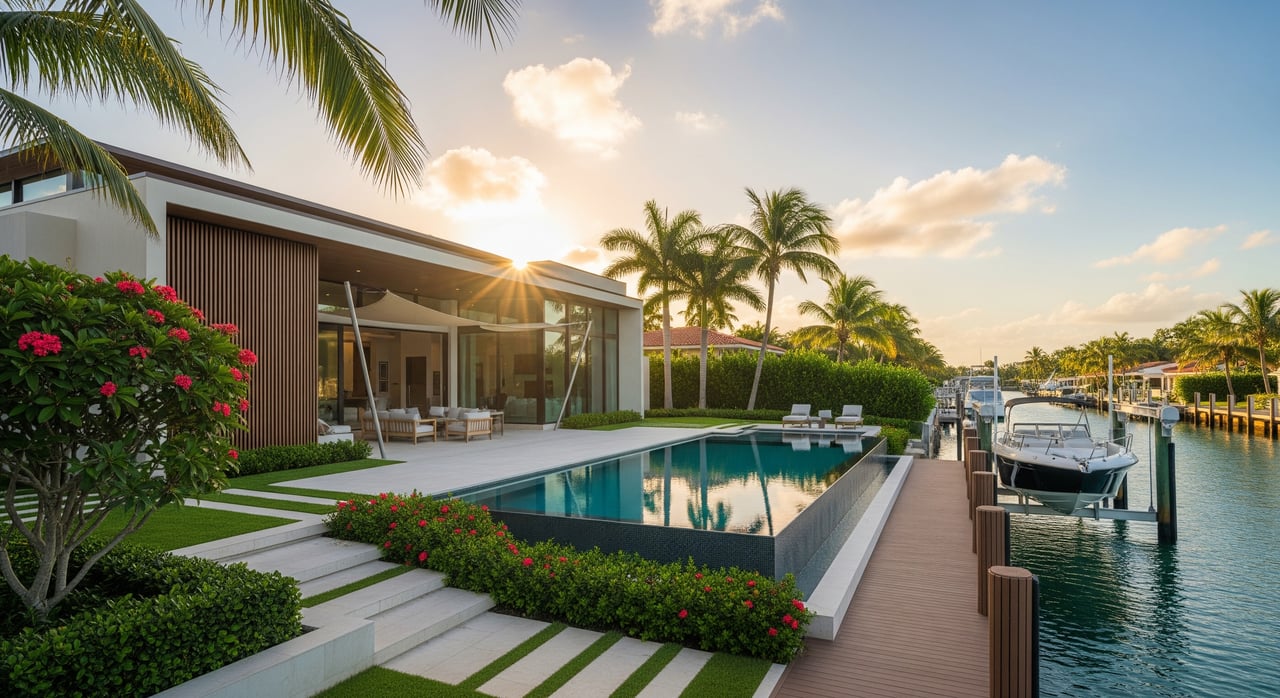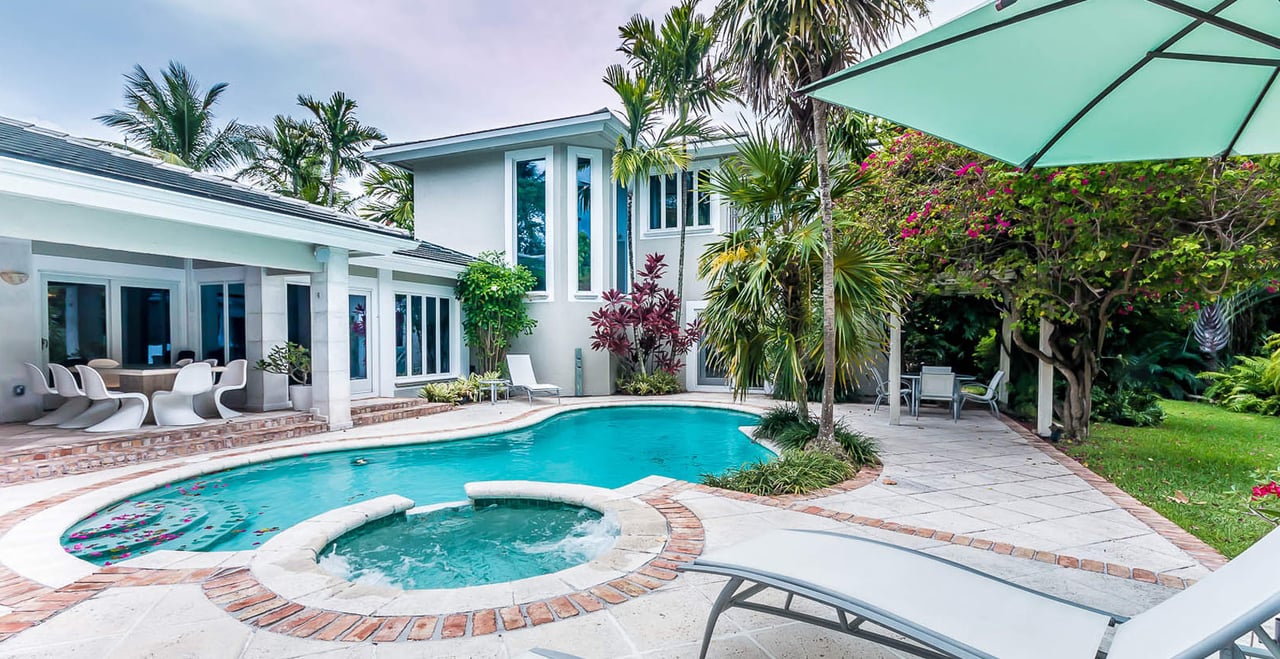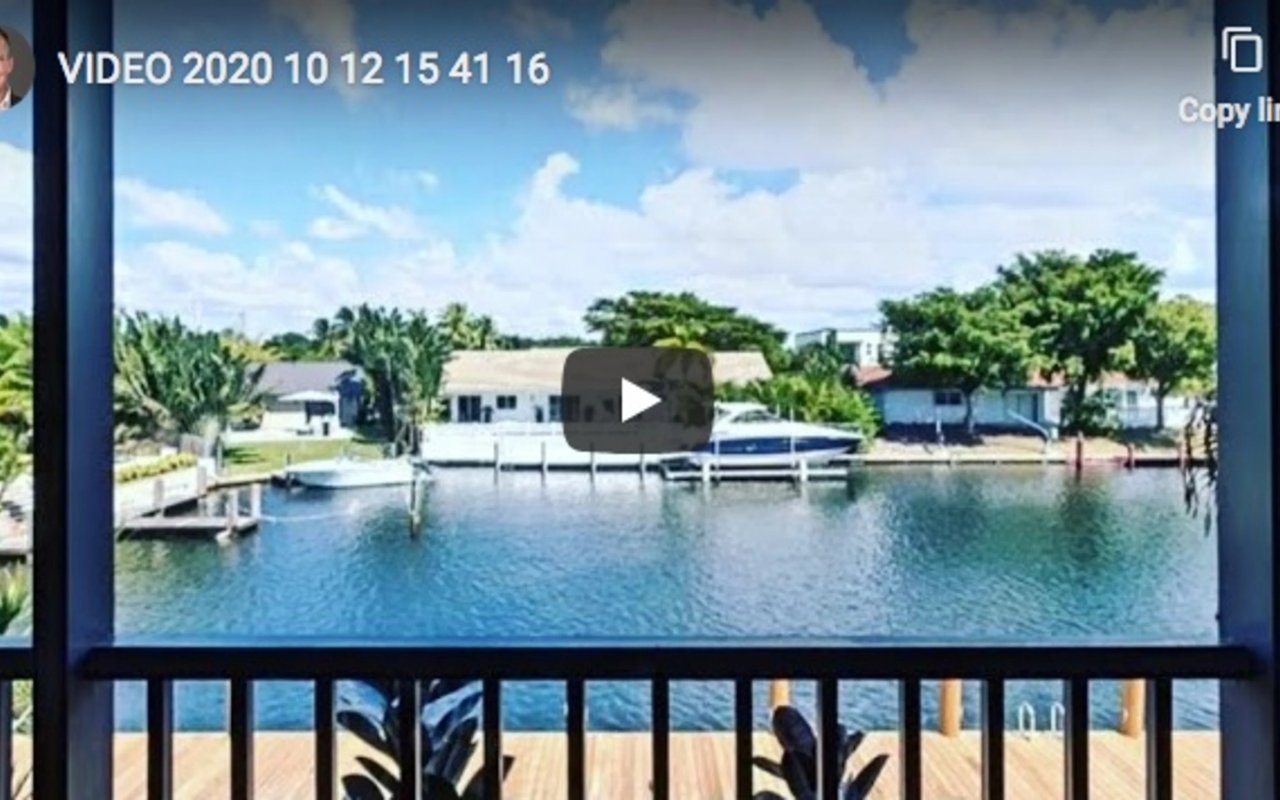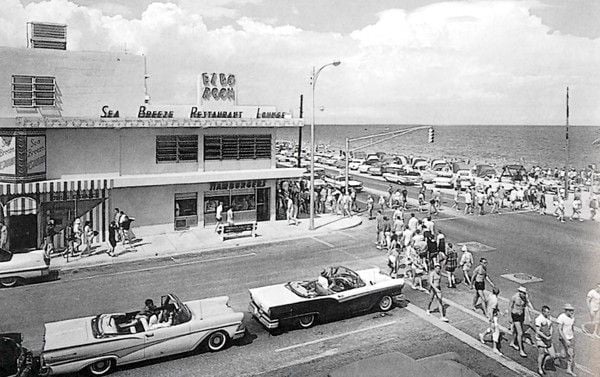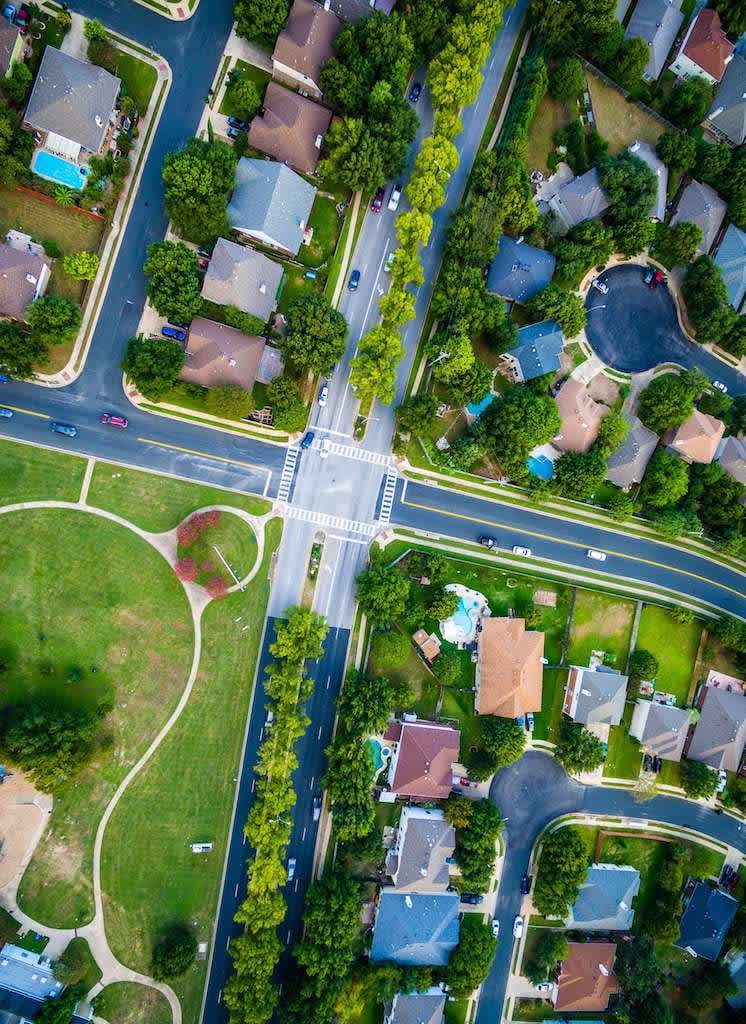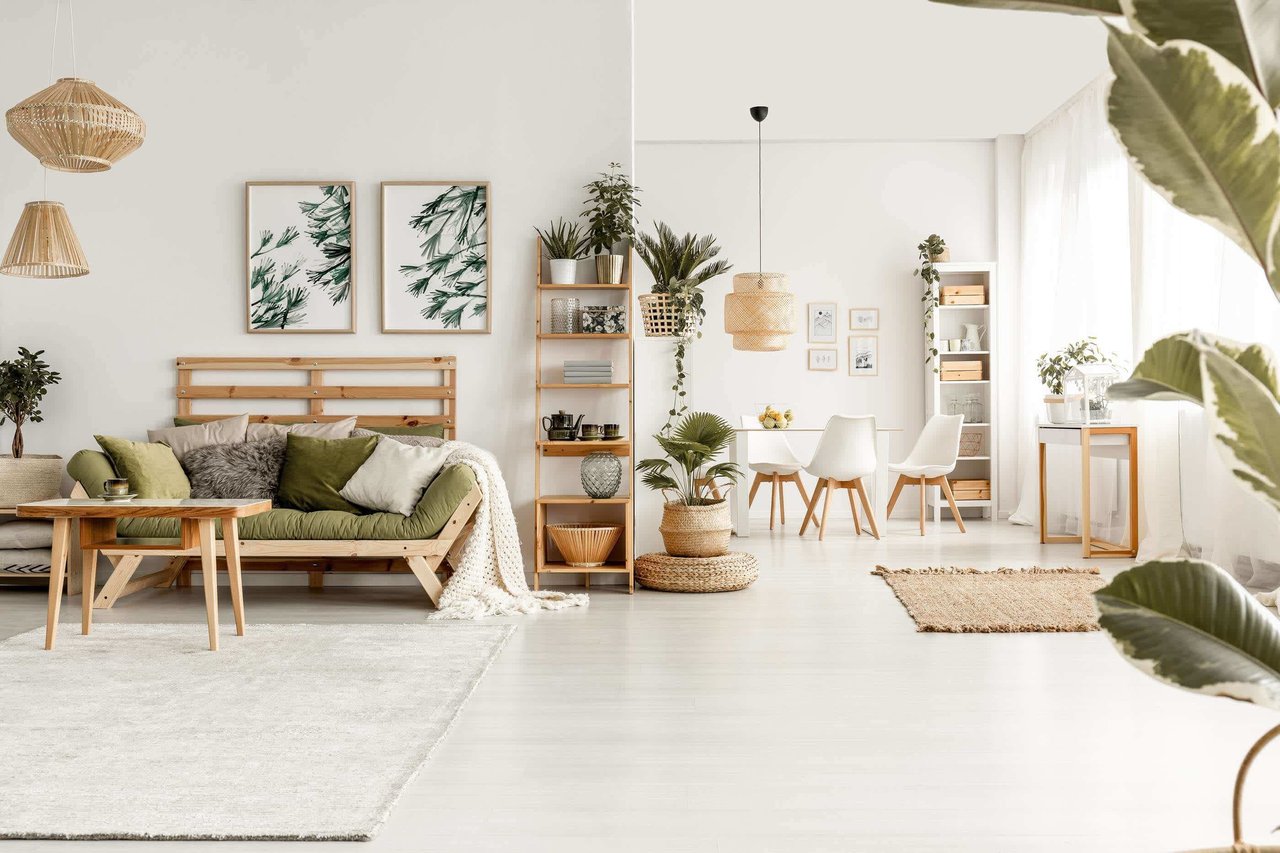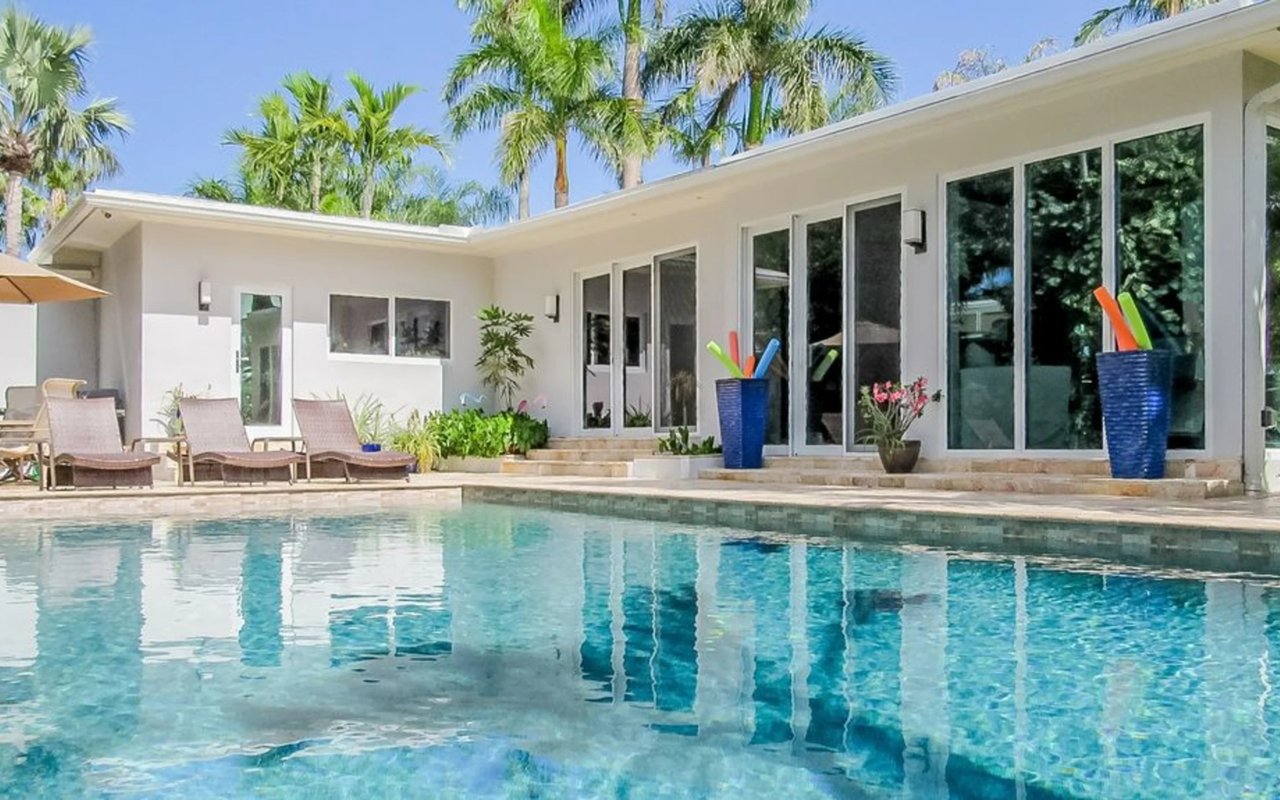
Scroll listings in Poinsettia Heights for a few minutes and a pattern shows up that doesn't show up the same way in Victoria Park or Lake Ridge. Every few homes split into one of two categories: a modest, mostly original three-bedroom on a lot that hasn't been touched in decades, or a brand-new, glass-fronted rebuild on the exact same size lot asking two to four times as much. What's missing is the house in between. The nicely updated ranch with a ten-year-old kitchen. The gently expanded bungalow that split the difference between original and new. In most central Fort Lauderdale neighborhoods, that middle tier makes up a healthy share of the inventory. In Poinsettia Heights it barely exists, and the reason isn't taste or timing. It's a zoning fight that ended in 1989.
The fight that set the boundary
Fort Lauderdale went through a wave of condo and townhome construction in the 1980s, and some of that density started pushing into Poinsettia Heights from the surrounding blocks. A group of residents didn't like where it was headed, so on February 1, 1989, they formed the Poinsettia Heights Civic Association specifically to stop it and to push the city toward rezoning the neighborhood's interior for single-family use only.
The rezoning succeeded. The association's own history of the neighborhood puts it plainly: "Townhomes and Condos are no longer allowed to be built within the neighborhood itself." Multifamily construction is still permitted along the two main roads that border the neighborhood, just not on the residential streets that make up the bulk of its housing stock. That decision, made more than three decades ago, is still the boundary every buyer, seller, and builder in Poinsettia Heights is working around today.
Why the boundary shows up in price, not just in zoning maps
Zoning that forbids splitting a lot into multiple units changes the math on what happens to an aging property. In a neighborhood where multifamily is allowed, a builder can often add value to a tired lot by converting it or replacing one house with several units. Inside Poinsettia Heights, that path doesn't exist. The only way to capture a rising land value is to tear down and build one new single-family home in its place. Not two homes. Not a duplex. One home, bigger and newer, on the same footprint the old one occupied.
That single constraint explains a lot about what's actually for sale right now. The subdivision was originally platted in 1954, built in the years right after World War Two as housing for returning veterans, and active single-family listings inside it currently span from $679,900 up to $2,875,000. The homes at the top of that range are almost always new construction on lots that held a smaller, much older house a year or two earlier. Zillow's home value index for the neighborhood, updated at the end of July 2026, puts the average at $677,127, essentially flat over the past year. Set that average next to a $2.875 million ceiling on new construction and the shape of the market becomes clear. The average isn't describing one typical home. It's being pulled from both directions by properties that share almost nothing except the same zoning code.
That split shows up in how fast homes move, too. Across the neighborhood, homes take a median 113 days to sell, according to a Redfin market snapshot from mid-2026, but the fastest-moving homes in that same dataset close in around five weeks. That isn't one market running at one speed. It's two groups of buyers shopping for two different things inside the same zip code, and the property's renovation state does more to predict which group shows up than the address does.
What this means if you're comparing neighborhoods
For a buyer, this changes what to ask a listing to answer. Language like "as-is" or "investor opportunity" in Poinsettia Heights usually signals that the appeal is the dirt, not the house, and a buyer chasing a fixer-upper there should expect to be bidding against builders who are pricing the lot for a rebuild, not the structure for a renovation. A "new construction" listing inside the interior streets is not adding to the supply. It replaced an older single-family home on the same parcel, one for one, and that ceiling on total units means the neighborhood's inventory can shrink in character even while it climbs in price.
If a buyer wants a lower-maintenance condo or townhome and likes the location, the search has to move outward to the two border roads or to a neighboring area where multifamily zoning still applies. It will not turn up on the interior blocks no matter how long the search runs, because the zoning that would allow it hasn't existed there since 1989.
For a seller holding an original, untouched property, the same boundary cuts the other way. A dated three-bedroom on a full-size lot isn't really competing against the neighbor's remodeled kitchen. It's competing against what a builder could do with the land, which is often a stronger argument for price than the interior condition suggests on its own.
A few signs are worth reading closely on a tour:
- Listing language like "as-is," "bring your vision," or "investor opportunity" usually points to a land-value sale, not a move-in-ready renovation candidate.
- A new-construction listing on the interior streets replaced an older single-family home. It did not add a unit to the neighborhood's supply.
- Condo, duplex, or townhome inventory connected to Poinsettia Heights will sit along the two border roads, not the residential blocks between them.
The middle isn't coming back on its own
The missing middle in Poinsettia Heights isn't a temporary supply gap that a few more listings will fill in. It's set by an ordinance the neighborhood's own civic association fought for in 1989 and still tracks through the city's planning process. Jim LaBrie, who stepped into the association's presidency in 2025 after several years on the city's Infrastructure Task Force Advisory Committee, is currently carrying that same advocacy work forward with the city. As long as the zoning holds, the only lever left for adding value to an older lot is a full rebuild, and every rebuild permanently removes one more original-condition home from the market without adding any units back.
That's the piece worth carrying into a side-by-side comparison with other neighborhoods. A flat year-over-year value number can read like a calm, steady market. In Poinsettia Heights, it's actually describing two different markets holding their ground on opposite ends of the same zoning line, with almost nothing built to bridge them.
A few questions worth answering directly
Can I build a duplex or add a unit on my lot in Poinsettia Heights? Not on the interior residential streets. The 1989 rezoning that the civic association secured restricts those parcels to single-family use, and multifamily construction is limited to the two main roads bordering the neighborhood.
Why do some new construction listings cost so much more than others nearby? Lot size, position, and how recently the rebuild happened tend to matter more than distance between addresses. Because every new build replaces an older home rather than adding density, each one is priced against what the land alone could support, not just against the finishes inside.
If I want a condo, should I keep looking inside Poinsettia Heights? Look at the two border roads first. The interior of the neighborhood has been zoned single-family only since 1989, so condo or townhome inventory tied to the Poinsettia Heights name will be concentrated there rather than on the residential blocks.
If you're weighing Poinsettia Heights against another Fort Lauderdale neighborhood and want help reading what a specific lot, rebuild, or original-condition listing is actually worth given this zoning history, Trent Sells Fort Lauderdale is a good place to start. Schedule a free consultation and home valuation, and get a straight read on where a property sits between the two ends of this market before you write an offer.