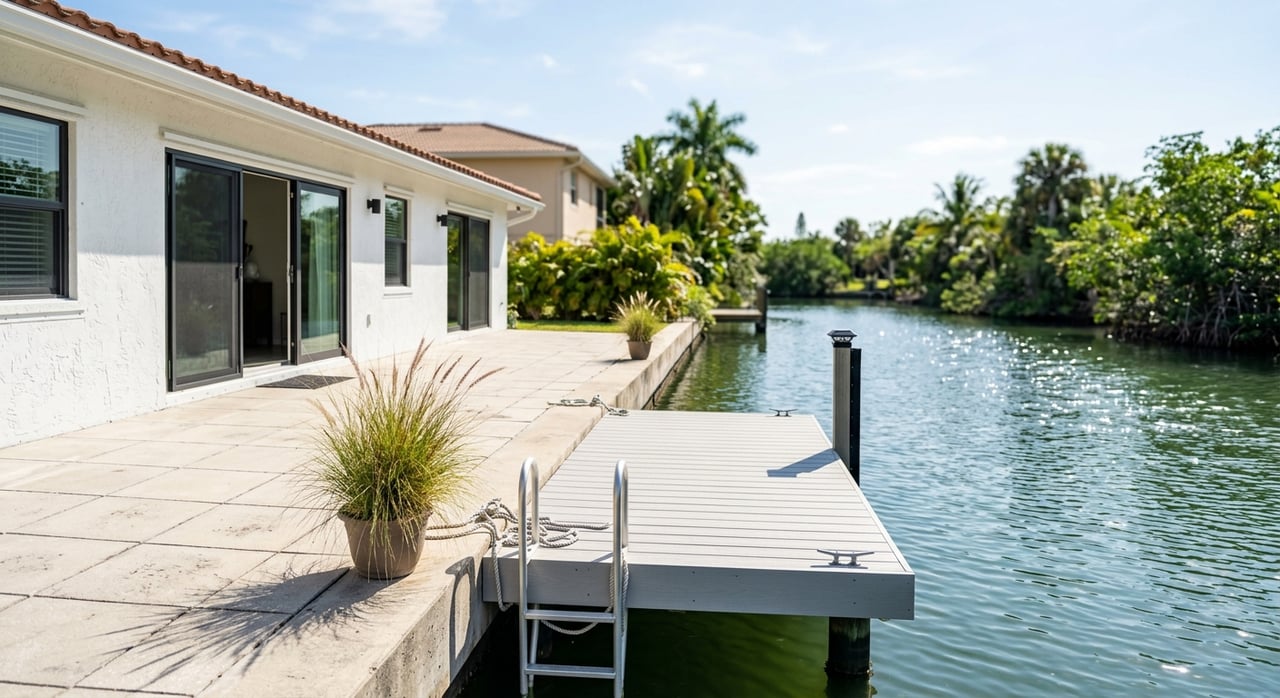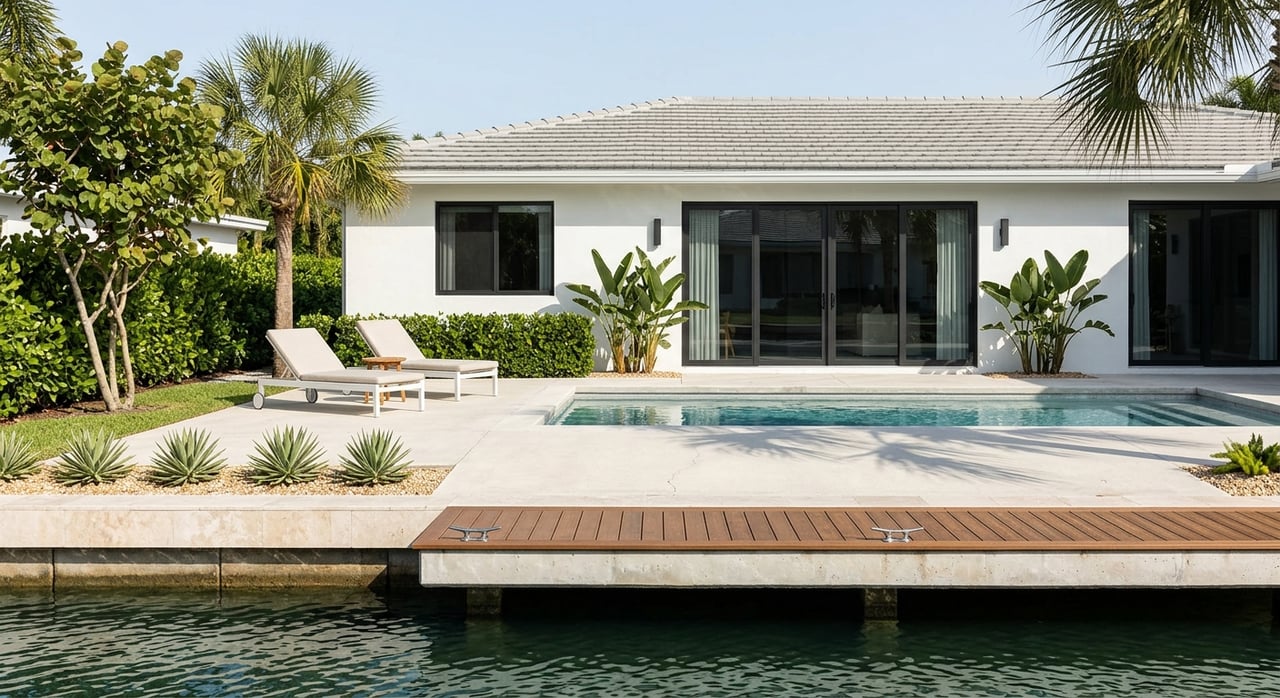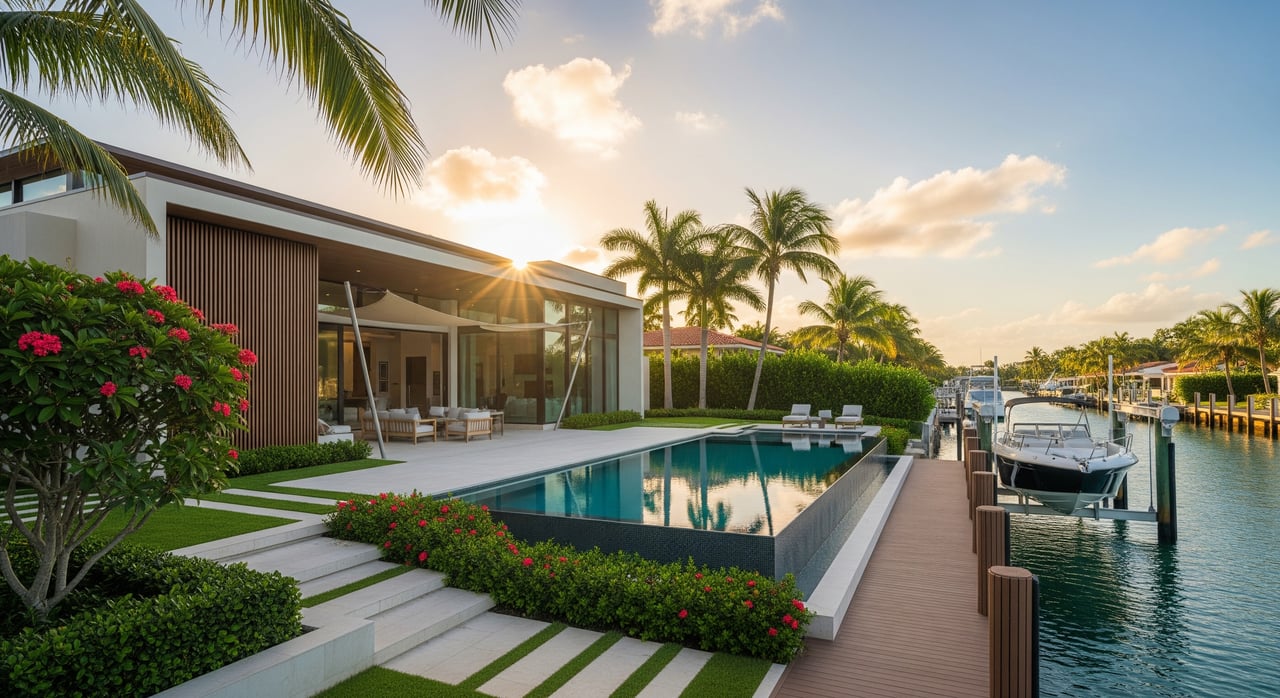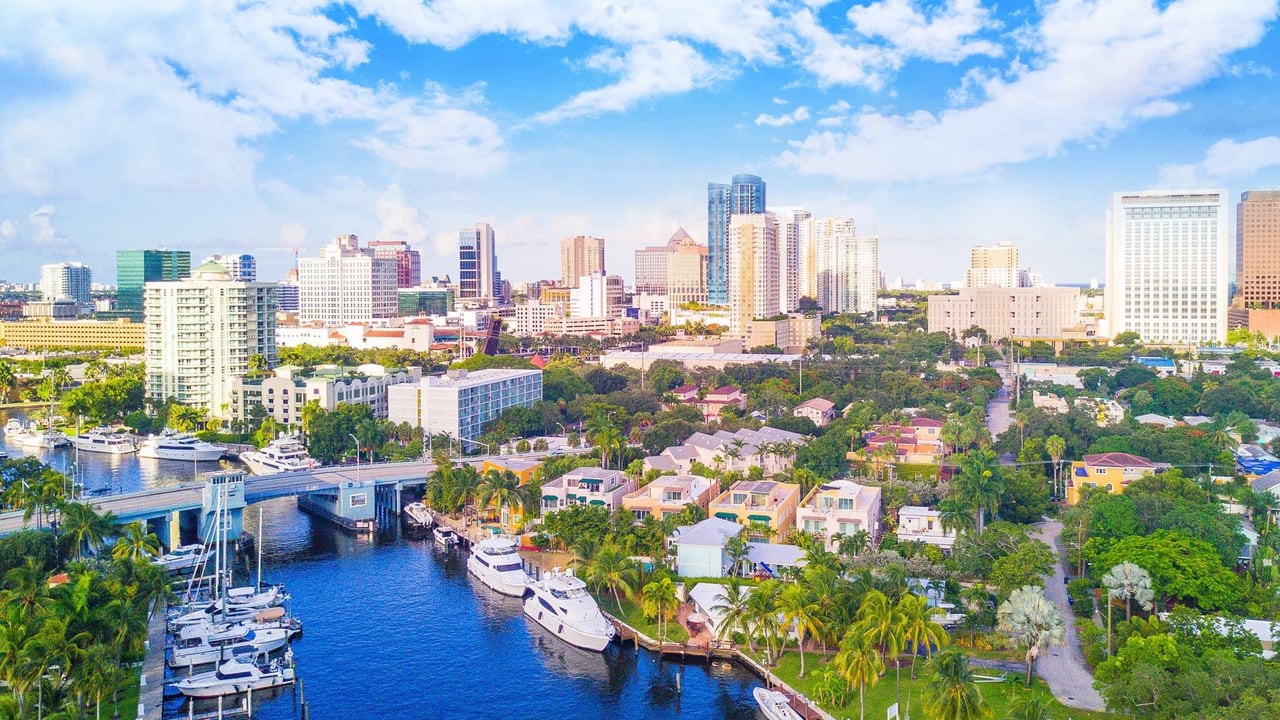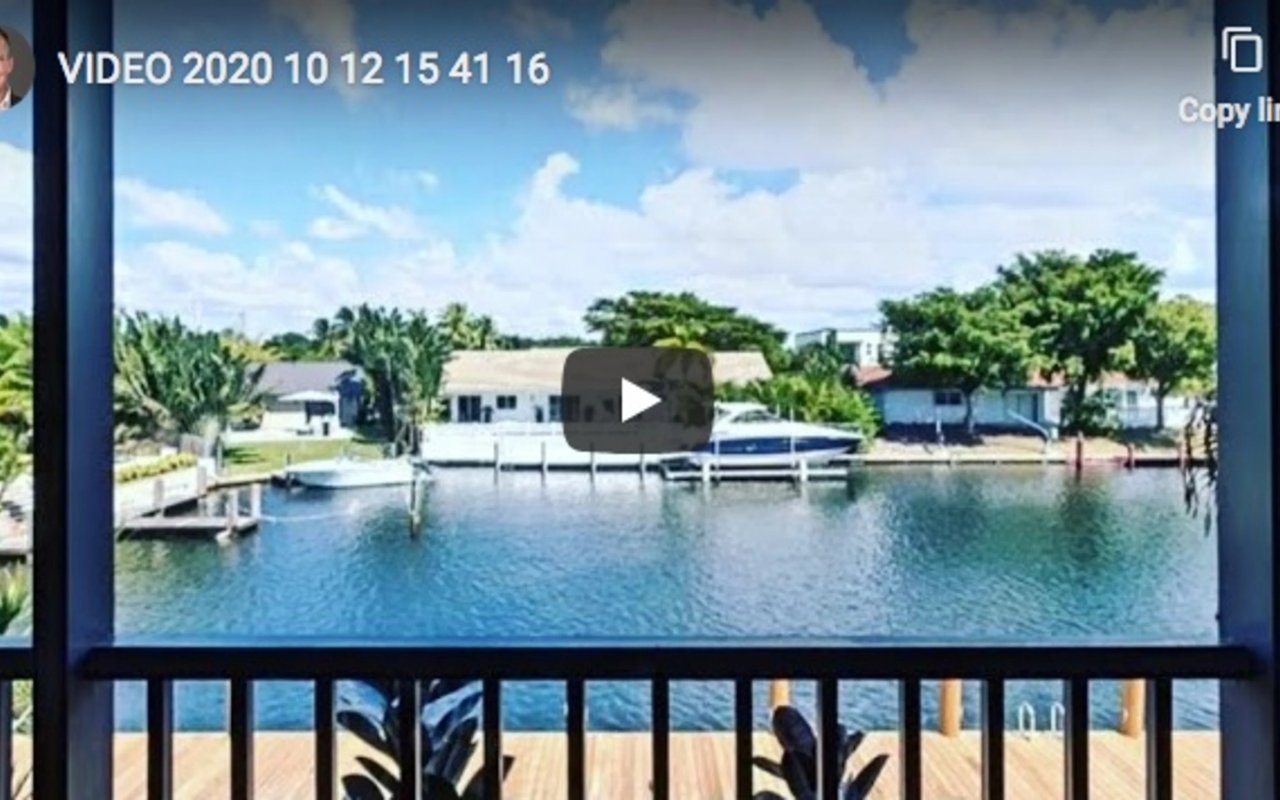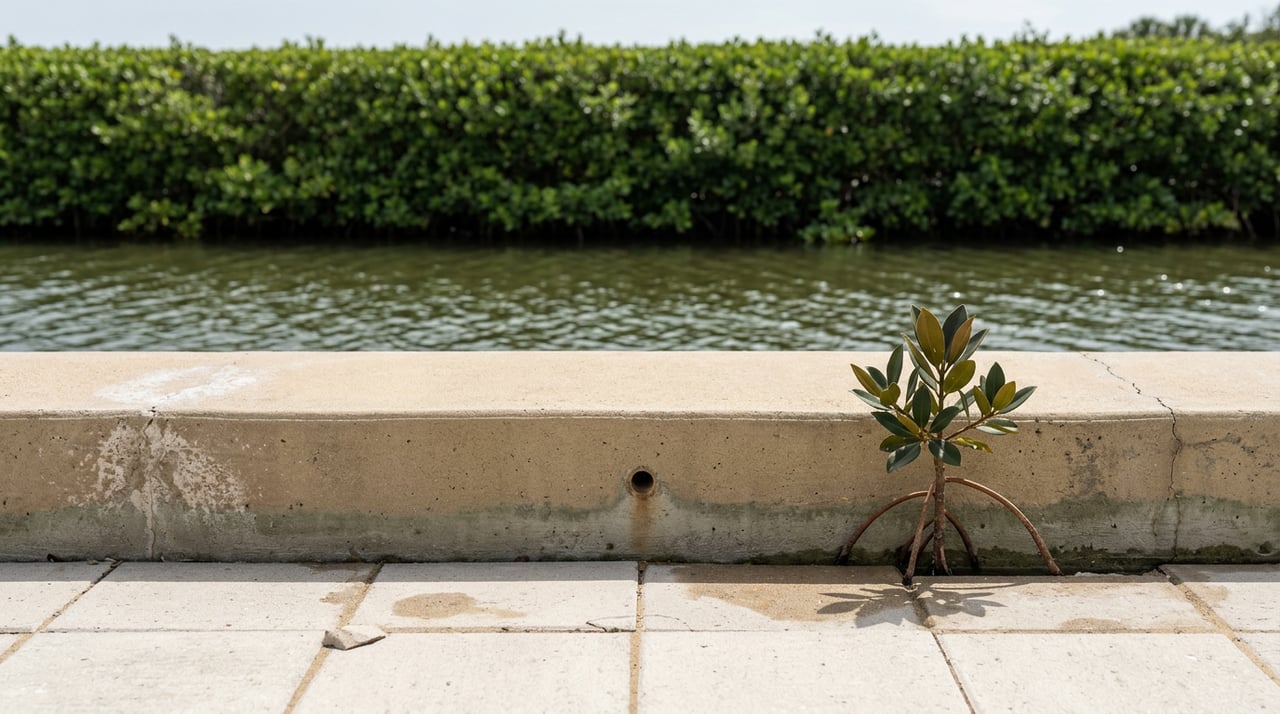
A buyer walks the dock, checks the boat lift, admires the water view, and hires a home inspector who spends four hours in the attic and crawlspace and never once puts on waders. That is standard practice in Fort Lauderdale, and it means the single structure holding your Coral Heights property out of the canal, your seawall, gets the least scrutiny of anything on the lot.
Most sellers assume the risk here is cosmetic: a crack in the cap, a little rust staining, maybe a quote for a patch job before closing. The real risk is procedural. Florida and Broward County have layered two separate disclosure obligations onto tidally influenced waterfront property, and a legal definition buried in county code can turn what looks like a $5,000 repair into a $30,000 to $80,000 rebuild the moment a contractor's estimate crosses a threshold most homeowners have never heard of. If you're planning to sell a canal-front home in Coral Heights, the paperwork matters as much as the seawall itself.
Two disclosure forms, not one
If you've sold waterfront property in Broward before 2025, you already know about the tidal flood barrier disclosure. Since December 31, 2020, Broward County Code Section 39-408 has required that any contract for the sale of real estate in a tidally influenced area include a specific bold-faced statement telling the buyer that the property may be subject to minimum seawall elevation standards. You can read the ordinance language directly on Broward County's resiliency planning page. It's short, it's mandatory, and skipping it isn't an option for a contract signed today.
What changed more recently is the second layer. Florida's expanded flood disclosure law took effect October 1, 2025, and it applies statewide to leases, sales, and condo transactions signed on or after that date. The new form, often referred to as FD-2, asks sellers to disclose whether they've filed a flood insurance claim, including through the National Flood Insurance Program, and whether they've received FEMA assistance for flood damage, regardless of the payout amount. The definition of "flooding" in the statute is broader than most sellers expect. It covers overflow of tidal waters, rapid accumulation of runoff, and sustained standing water from rainfall, not just a FEMA flood zone designation. You can review the underlying statute at Florida's Online Sunshine statute library.
So a Coral Heights seller listing this fall isn't filling out one form. They're filling out two, one county-specific and one statewide, and both ask questions that a typical pre-listing walkthrough never surfaces.
The line between a repair and a rebuild
Here's the mechanism that catches people off guard. Broward's resiliency code doesn't just set a height standard for new seawalls. It defines what counts as a "substantial" repair, and that definition decides whether you're looking at a patch job or a full permitted rebuild along your entire shoreline.
Under the ordinance, a repair becomes substantial when it modifies more than 50 percent of a property's shoreline structure, or when an attachment such as a mooring costs more than half of what a new tidal flood barrier would cost to install on that property. Cross that line and the entire wall along your shoreline has to be brought up to current standards, not just the section that failed.
That 50 percent threshold is easy to hit on an older seawall. A section of cracked cap here, a undermined stretch there, and a contractor's honest scope of work can add up past half the wall's length without anyone intending to trigger a rebuild. The homeowner who thought they were budgeting for a repair is suddenly budgeting for a structural replacement, complete with an engineer of record and permitting review from the state and potentially the Army Corps of Engineers.
What the numbers actually look like
Seawall costs vary by material, access, and lot width, but the ranges reported across South Florida marine contractors and waterfront brokerages are consistent enough to plan around.
| Scope of work | Typical cost | What triggers it |
|---|---|---|
| Minor repair (cracks, drainage fixes) | Well under the 50% threshold on most lots | Routine maintenance, doesn't require full compliance |
| Full replacement, 75-foot lot | $30,000 to $80,000 | "Substantial" repair or voluntary full rebuild |
| General repair/replacement range | $20,000 to $100,000+ | Depends on extent of damage and property size |
| Height increase to meet new standard | $500 to $1,000 per linear foot | Bringing an older wall up to current elevation code |
None of these figures include the separate marine or structural engineer inspection that most standard home inspections don't cover. A general home inspector will often flag a seawall as "recommend further evaluation" and stop there, which leaves the actual condition assessment, and the actual number, to a specialist the buyer or seller has to hire separately.
The clock is already running
The height standard itself isn't a distant hypothetical. Broward's ordinance requires new and substantially repaired tidal flood barriers to reach at least 4 feet above the North American Vertical Datum if permitted before January 1, 2035, with a required conversion to 5 feet by 2050. That means a seawall permitted this year can still meet the lower 4-foot standard, but the clock on the eventual 5-foot requirement is already counting down for every property owner along Coral Heights' canals.
For sellers, this creates a real timing question that has nothing to do with market conditions. A wall built to today's 4-foot minimum is compliant now, but a buyer doing long-term math on the property should understand that a future substantial repair will require the 5-foot standard, not the one currently on the books. That's a conversation worth having proactively rather than letting a buyer's inspector raise it during the option period.
What to have ready before you list
If you own canal-front property in Coral Heights, the paperwork goes faster and the negotiation stays calmer when you can hand a buyer's agent a complete file instead of scrambling for records after an offer comes in. Before you list, it helps to gather:
- Any permit history for seawall work, dock construction, or boat lift installation, whether through the City or Broward County's Building Department
- Recent engineer reports or inspection certificates, especially if any repair work has been done in the last several years
- Photos and invoices from past maintenance or repair work, dated and itemized
- Elevation documentation if you have it, since this feeds directly into whether your wall meets the 4-foot or eventual 5-foot standard
- Records of any insurance claims tied to flood or tidal water intrusion, since the new statewide disclosure form asks about this directly
None of this replaces a professional seawall inspection, but it means the inspection confirms a story you already understand rather than surfacing surprises for the first time during a 15-day inspection period.
A few questions worth answering directly
Does every home in Coral Heights need this disclosure, or only the ones directly on a canal? The Broward tidal flood barrier disclosure applies specifically to property in tidally influenced areas. If your lot backs onto a canal or waterway connected to the tidal system, it applies. A home a few streets inland without water frontage typically wouldn't trigger the same seawall-specific disclosure, though the broader statewide flood disclosure form has wider criteria.
Can I just do the repair myself without pulling a permit if it's a small job? Structural work on a seawall in Broward requires permitting regardless of size, and unpermitted work creates its own disclosure problem down the line. It's also the kind of thing a title search or a sharp buyer's agent tends to find.
If my seawall is old but shows no visible damage, do I still need an inspection before I sell? A visual walk-through from the yard won't catch undermining, tieback corrosion, or soil loss behind the wall, all of which are common in seawalls that are decades old. A marine or structural engineer's report gives both sides a documented baseline, which tends to prevent last-minute renegotiation far more effectively than an assumption that "it looks fine."
Selling a canal-front home in Coral Heights isn't more complicated than selling anywhere else in Fort Lauderdale, but it does have a few extra steps that only show up once you're deep in a transaction. Getting ahead of the disclosure requirements, understanding where the 50 percent line sits on your particular wall, and knowing whether you're working against the 2035 or 2050 height standard turns a potential closing delay into a normal part of the process.
If you're weighing a sale in Coral Heights and want a straight answer on what your specific property's paperwork looks like, Trent Head has spent years walking Broward's waterfront transactions through exactly this kind of detail. Schedule a free consultation and home valuation to find out where your property stands before a buyer's inspector does.